
Article: Baby Acne vs. Rash: How to Tell the Difference
%20skin%20condition...)
Baby Acne vs. Rash: How to Tell the Difference
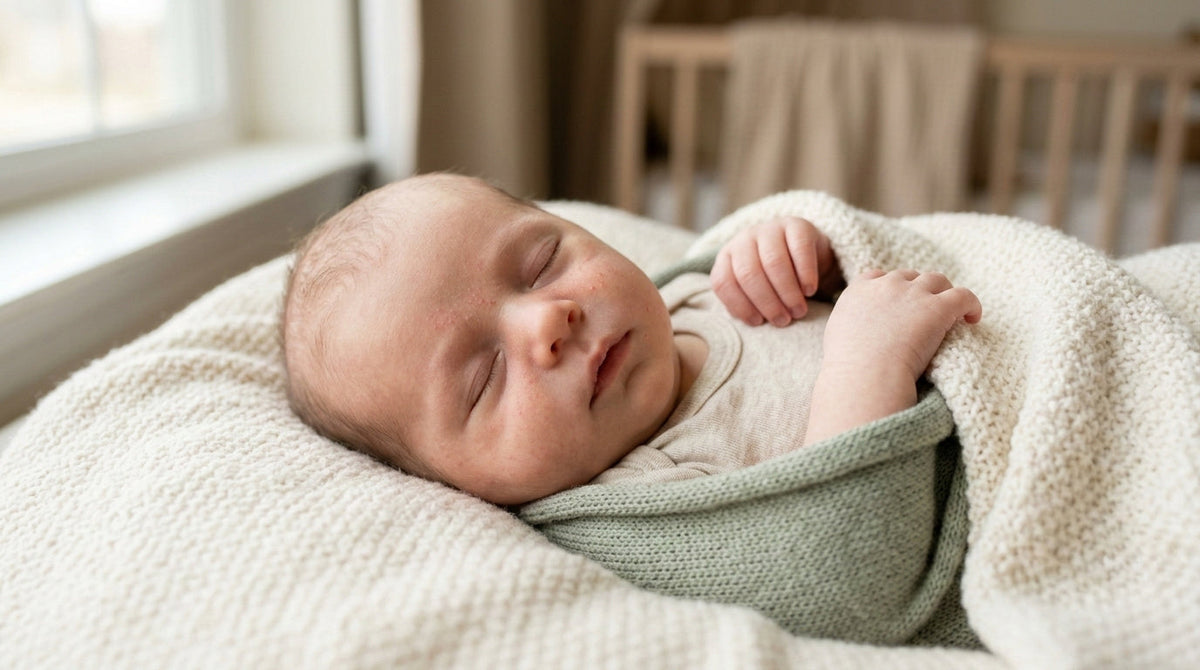
If you notice tiny bumps on your baby’s face, your first thought might be:
“Is this baby acne?”
The truth is — not all newborn bumps are acne.
Several very common (and very harmless) skin conditions can look similar at first glance. The key is knowing what to look for.
Let’s simplify it.
First: What Is True Baby Acne?
Neonatal acne usually:
-
Starts within the first 2–3 weeks of life
-
Appears on the cheeks and nose
-
Looks like small red bumps
-
May include whiteheads (closed comedones)
It usually clears on its own within a few weeks to a few months.
Most cases do NOT require treatment.
Common Look-Alikes (And How to Spot the Difference)
1. Milia (Tiny White Pearls)
Very common and harmless.
Looks like:
-
Tiny white or yellow pinhead bumps
-
Not red
-
Not inflamed
-
Present at birth
Key clue: They look like little pearls — not pimples.
They disappear on their own.
2. Neonatal Cephalic Pustulosis
This is often mistaken for acne.
Looks like:
-
Small red bumps or pustules
-
No whiteheads or blackheads
Key clue:
If there are NO comedones (whiteheads/blackheads), it may not be acne.
Usually resolves on its own.
3. Heat Rash (Miliaria)
Very common in warm environments.
Looks like:
-
Tiny red bumps or small clear blisters
-
Often in folds (neck, chest, diaper area)
Key clue:
Improves quickly once baby is cooled down.
4. Eczema (Atopic Dermatitis)
More common after 3 months.
Looks like:
-
Dry, rough, itchy patches
-
Sometimes crusting during flares
Key clue: Itch + dryness + recurring flares.
Eczema needs a gentle skincare routine and sometimes medical guidance.
5. Contact Dermatitis
Triggered by something touching the skin.
Common causes:
-
Drool
-
Wipes
-
Fragrance
-
Soap
-
Food residue
Key clue:
The rash appears exactly where the trigger touches.
Think: “Where it touches is where it rashes.”
6. Impetigo (Needs Treatment)
This is different from acne.
Looks like:
-
Red sores
-
Oozing
-
Honey-colored crust
This is contagious and requires antibiotics.
Call your pediatrician if you suspect this.
Quick At-Home Differentiators
When you’re unsure, look at these:
✔ Timing
-
Birth = often milia
-
2–3 weeks = acne or cephalic pustulosis
-
After 3 months = eczema more likely
✔ Texture
-
White pearls = milia
-
Pustules without whiteheads = not classic acne
-
Dry + itchy = eczema
✔ Symptoms
If baby has:
-
Fever
-
Poor feeding
-
Extreme sleepiness
-
Rapidly spreading rash
-
Purple spots that don’t fade when pressed
Seek medical care immediately.
Safe Home Care (When It’s Mild)
For most benign newborn facial bumps:
-
Use lukewarm water
-
Avoid scrubbing
-
Avoid oily/greasy products
-
Skip adult acne products
-
Do not squeeze or pick
Less is more.
Baby skin is sensitive — especially in the first month.
When to See a Pediatrician
Make an appointment if:
-
Acne appears after 6 weeks (possible infantile acne)
-
Rash is spreading or worsening
-
You see oozing or crusting
-
Baby seems unwell
-
You feel unsure
Trust your instincts.
The Bottom Line
Not all baby bumps are acne.
Most newborn skin changes are temporary and harmless.
The most important things:
-
Observe the timing
-
Notice the texture
-
Avoid over-treating
-
Watch for red flags
When in doubt, simplify your skincare routine and check with your pediatrician.
Your baby’s skin is adjusting to the world.
Give it time — and gentle care.
Read more
Why Your Baby’s Skin Is So Sensitive (And What You Can Do About It)
Baby skin is thinner, loses moisture faster, and reacts more easily than adult skin — which is why dryness, redness, and eczema are so common. Learn what makes infant skin sensitive and the simple,...
Read more