
Article: How to Make Bath Time Fun (Without the Stress)

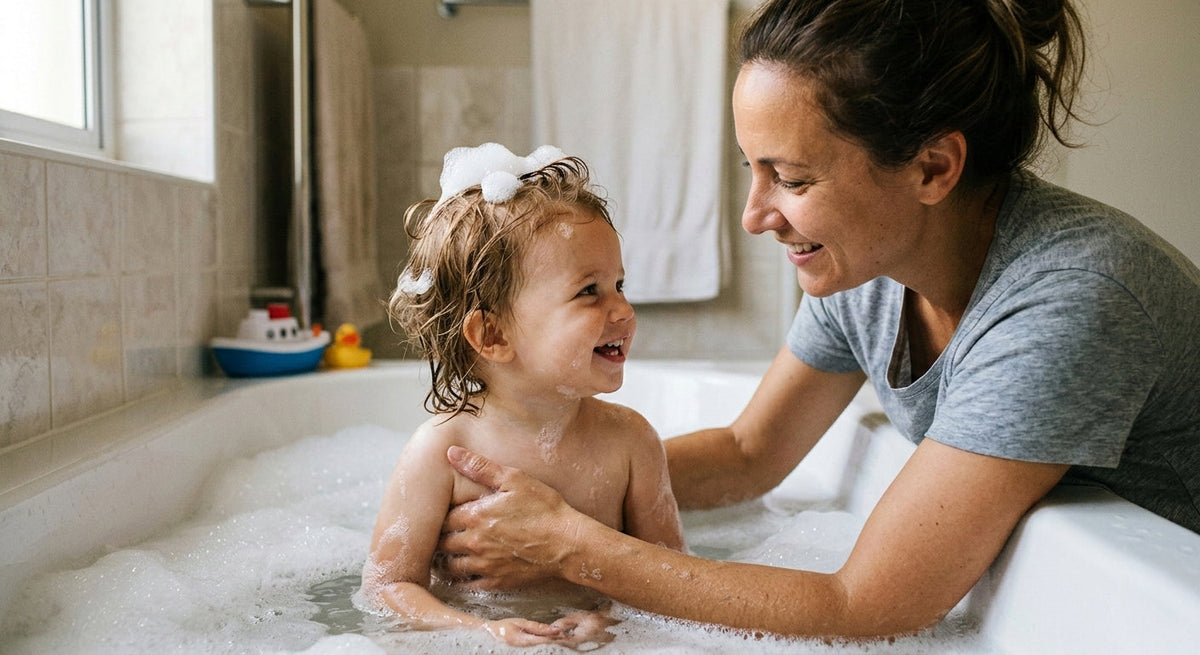
How to Make Bath Time Fun (Without the Stress)
Bath time can be one of the sweetest parts of your day — or one of the most chaotic.
The good news? With the right setup, it can be both safe and fun.
When you treat the tub like a mini “yes space” (a controlled, safe environment where kids can explore), you get more giggles, less fighting, and a smoother bedtime — whether you’re bathing a newborn, a wiggly toddler, or a chatty preschooler.
Let’s break it down simply.
First Things First: Safety Always Wins
Before we talk bubbles and toys, let’s talk non-negotiables.
🛁 1. Never leave your child alone — ever.
Children can drown in as little as 1–2 inches of water, and it can happen silently and quickly. Stay within arm’s reach at all times.
If you need to answer the door or phone, wrap your child in a towel and take them with you.
Bath seats and rings are not safety devices. They are bathing aids — supervision is still required.
🌡 2. Water temperature matters.
Two numbers to remember:
-
Set your home’s hot water heater to 120°F (48.9°C) max
-
Aim for bath water around 100°F (38°C)
Always test with your wrist or elbow before putting baby in.
📵 3. No multitasking.
Bath time is not a scroll-your-phone moment.
Supplies should be within reach before you start so you never have to step away.
Why Bath Time Is Actually Powerful for Development
Bath time isn’t “just cleaning.”
It’s:
-
Sensory exploration
-
Language building
-
Motor skill practice
-
Emotional connection
-
Routine building for better sleep
Water naturally creates cause-and-effect learning:
Pour → splash
Squeeze → drip
Float → move
That back-and-forth interaction — especially when you narrate what’s happening — builds brain connections.
When you talk during bath time (“Warm water on your toes!”), you’re strengthening language development even if your child isn’t talking yet.
The Secret Strategy: Play First, Wash Last
Here’s a small shift that makes a big difference:
👉 Start with play for 5–10 minutes.
👉 Then wash at the end.
Kids don’t like when soap interrupts fun.
When you make washing the “final chapter” instead of the interruption, cooperation usually improves.
Age-by-Age Bath Ideas
👶 Infants (0–12 months)
At this age, YOU are the toy.
Keep it simple. Babies don’t need much.
Try:
-
Gentle narration (“Toes! Splash!”)
-
Soft singing (one opening song, one “all done” song)
-
Warm washcloth “rain” on arms and legs
-
A slow cup pour on feet
-
A floating washcloth “boat”
Keep water shallow. Never bathe baby in running water (temperature can shift suddenly).
Baths at this age don’t need to happen daily — about three times per week is often enough unless baby is messy.
🚼 Toddlers (1–3 years)
This is the independence + chaos stage.
Focus on:
Pour & dump station
-
Measuring cups
-
Colander “rain cup”
-
Funnel play
Pretend play
-
Wash a toy animal
-
“Car wash”
-
“Soup kitchen”
Learning games
-
Count splashes
-
Find the blue toy
-
Wash “elbows, knees, tummy”
Pro tip: Let them choose 2 toys — not 10. Limits reduce power struggles.
🧒 Preschoolers (4–6 years)
Older kids love rules, missions, and mini experiments.
Try:
-
Sink or float predictions
-
“How many small cups fill one big cup?”
-
Building a waterfall machine
-
Sponge squeeze challenges
-
Clean-up races with a timer
Important: Swimming skills do NOT replace supervision.
No standing. No roughhousing. No pushing games.
Calming Bath vs. Playful Bath
Use this decision guide:
Is bedtime soon?
Yes → Choose calming.
-
Dim lights
-
One toy only
-
Predictable wash order
-
Slower voice
No → Choose playful.
-
5–10 min play first
-
Set safety rules
-
Wash at end
-
Quick cool-down rinse
Consistent bedtime routines (often including baths) are linked to better sleep outcomes for young children — so use bath time strategically.
Weekly Bath Plan (Simple & Doable)
You don’t need daily baths.
Example:
-
Monday – Calming bath
-
Wednesday – Playful bath
-
Friday – Choose based on mood
-
Other days: warm washcloth clean
Simple. Sustainable. Less dryness.
Troubleshooting Common Bath-Time Struggles
😟 Fear of the Bath
Common triggers:
-
Soap in eyes
-
Slipping
-
Loud draining sound
What helps:
-
Shorter baths
-
One comfort toy nearby
-
Drain tub after they exit
-
Offer limited choices (“Cup rinse or washcloth rinse?”)
You can temporarily switch back to sponge baths if needed.
💧 Sensory Aversion (especially hair washing)
Try:
-
Lean-forward rinsing
-
Washcloth “eye shield”
-
Slower pours
-
Less shampoo
-
Warmer room, dimmer lights
Reduce sensory overload.
🌸 Skin Sensitivity / Eczema
If skin is irritated:
-
Short lukewarm baths
-
Fragrance-free cleanser only where needed
-
Avoid bubble bath
-
Pat dry (don’t rub)
-
Moisturize immediately after
Choosing Bath Toys Safely
When buying toys, look for:
-
Age-appropriate labels
-
No small detachable parts (especially under 3 years)
-
Easy-to-dry design (water trapped inside toys can grow biofilm)
-
Reputable brands
Dry toys thoroughly after use. Drain storage bins help.
Final Thoughts
Bath time doesn’t need to be:
-
A power struggle
-
A sensory overload
-
Or a rushed afterthought
With a safe setup, short play window, and consistent structure, bath time becomes:
✔ A connection ritual
✔ A learning opportunity
✔ A smoother path to bedtime
And sometimes?
It becomes the best 10 minutes of your day.
Read more

Why Your Baby’s Skin Is So Sensitive (And What You Can Do About It)
Baby skin is thinner, loses moisture faster, and reacts more easily than adult skin — which is why dryness, redness, and eczema are so common. Learn what makes infant skin sensitive and the simple,...
Read more